Businesses & industry
Explore this record →A Bank Takes Shape as Electric Light Approaches
In September 1883, a new bank organized on Sunbury Street while a separate electric-light venture moved toward operation.
Newspaper coverage: 1883
Shamokin Stories collection
Stories of Shamokin drawn from the newspapers of their day.
In September 1883, a new bank organized on Sunbury Street while a separate electric-light venture moved toward operation.
Newspaper coverage: 1883
Shamokin’s Civil War veterans joined public remembrance with practical support and community organizing.
Newspaper coverage: 1868–1890
A teacher became a physician, crossed Shamokin’s coal hills on house calls, and kept serving patients long after she expected to retire.
Newspaper coverage: 1897–1947
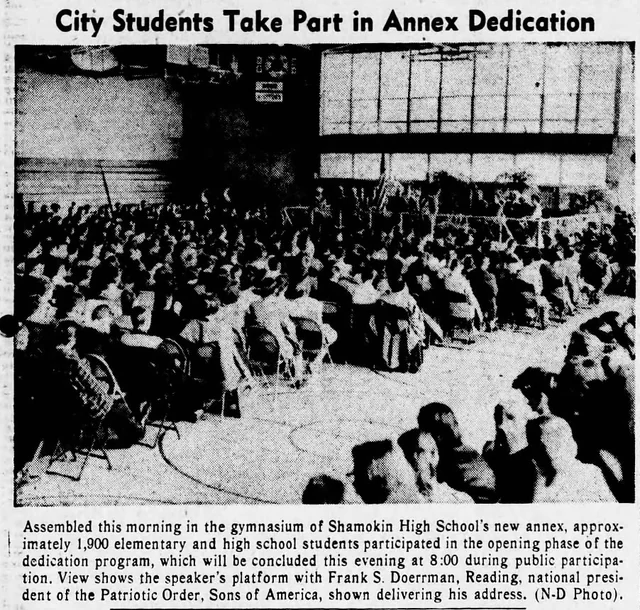
School construction and dedications show different communities preparing new spaces for their students.
Newspaper coverage: 1883–1975
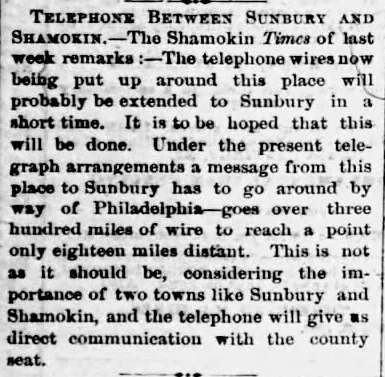
Shamokin’s telephone network grew through wires, operators and regional exchanges—from the first equipment to dial service.
Newspaper coverage: 1880–1964
Congressional requests, brief newspaper notices and a 1905 postcard reveal several stages in Shamokin’s effort to place cannon beside a soldiers’ monument.
Newspaper coverage: 1899–1902
The move toward borough government in 1864 turned a growing community’s ambitions into local offices and elections.
Newspaper coverage: 1864–1964
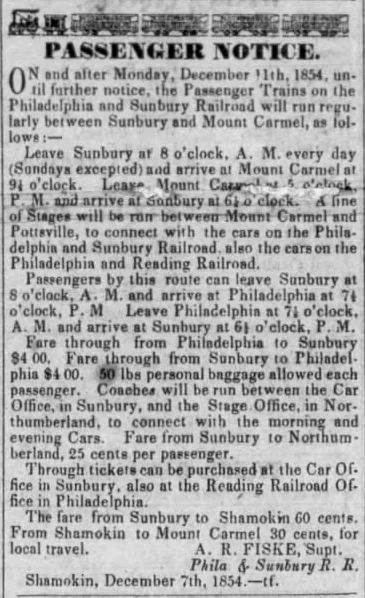
Early passenger notices made the railroad tangible in departure times, journey lengths, and fares.
Newspaper coverage: 1853–1854
Street-light contracts, storm damage and an 1899 consolidation show the businesses behind Shamokin’s growing utility services.
Newspaper coverage: 1887–1899
A workers’ meeting, depot gunfire and months of hardship: the unrest of 1877 followed Shamokin families long after the first dispatches.
Newspaper coverage: 1877–1878
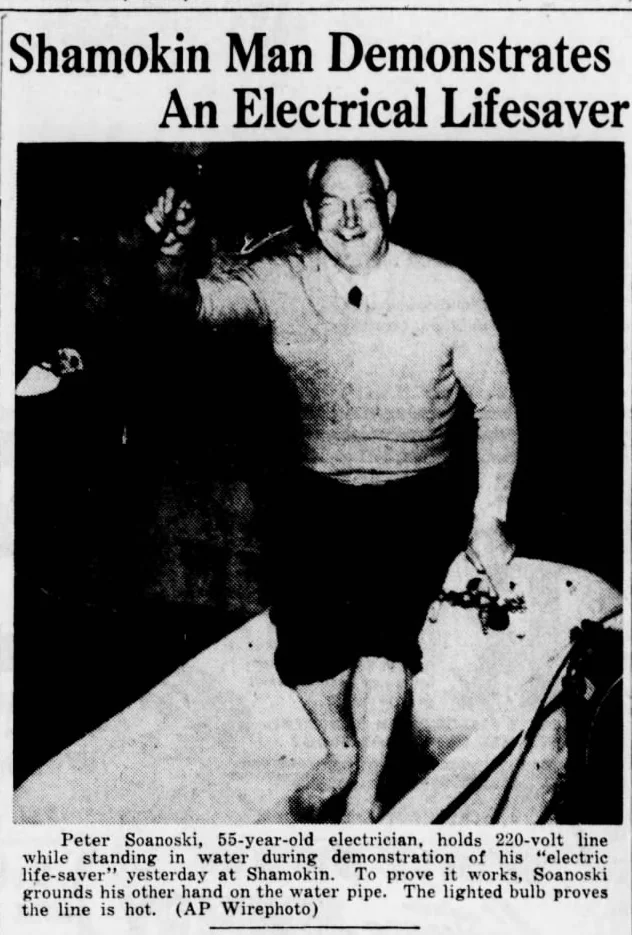
Mine lamps, breathing apparatus, heating equipment, protective electrical circuits, and garment steamers show how local technical work moved between workplaces, patent drawings, and the newspaper.
Newspaper coverage: 1871–1969
A June 1873 disaster killed ten men at Henry Clay Colliery. Newspaper reporting preserved their loss; the later mine-inspector report added a casualty list, ventilation analysis, and an account of the inquest.
Newspaper coverage: 1873
An 1842 account described an operating furnace and ambitious plans for industry well before Shamokin became a borough.
Newspaper coverage: 1842
The records of a night watchman’s death and later trials require a careful distinction between accusation, conviction, and outcome.
Newspaper coverage: 1874–1879
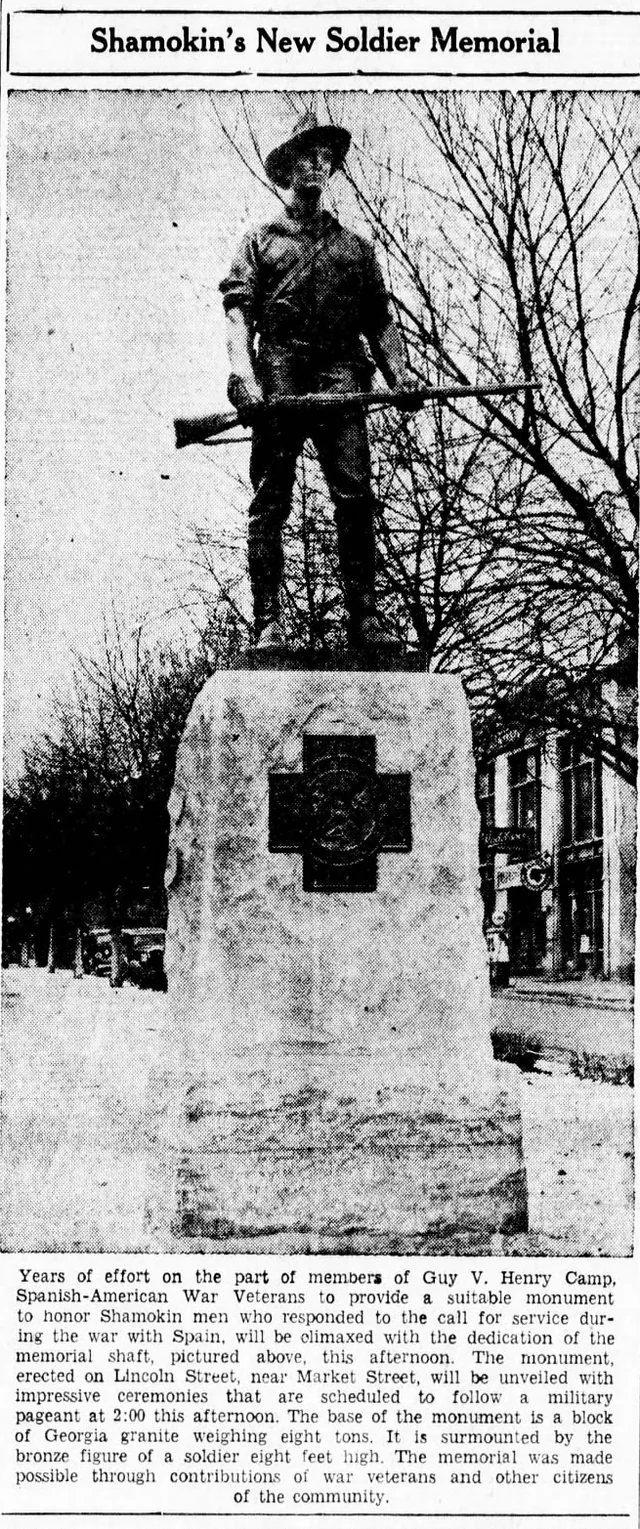
Monument dedications made headlines, while upkeep and later commemorations kept remembrance part of public life.
Newspaper coverage: 1871–1938
Reports about Radle and Helen Shaffer show why entry into the legal profession cannot be reduced to an unqualified claim of “first.”
Newspaper coverage: 1899–1934
Shamokin prepared lights and lodging for the Grand Army of the Republic’s state encampment in February 1890.
Newspaper coverage: 1878–1890
A hotel lamp introduced a new kind of street spectacle, while contracts, customer connections and machinery problems shaped the electric service behind it.
Newspaper coverage: 1883–1887
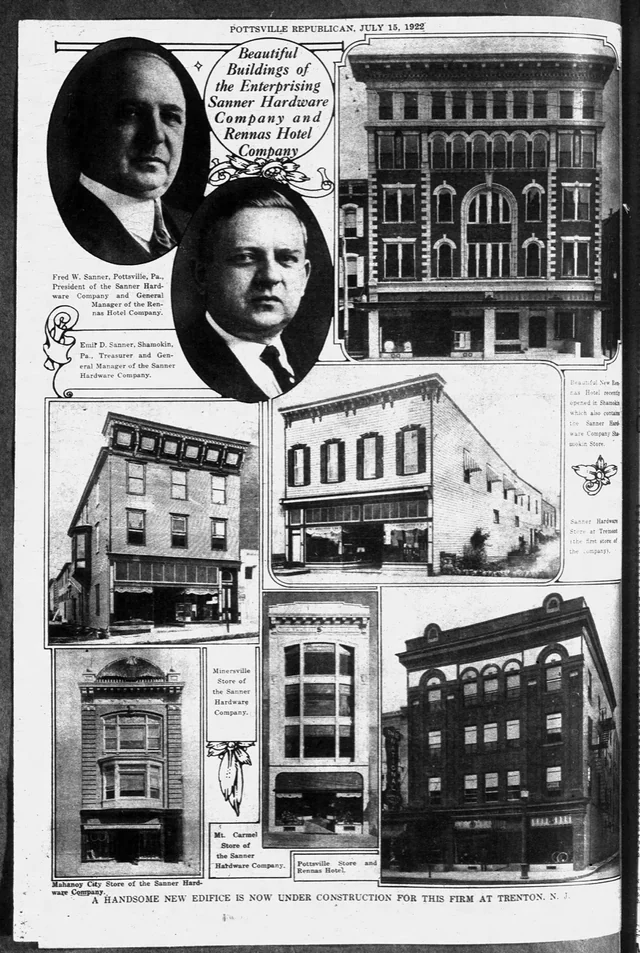
Directories and an 1885 map place hotels within Shamokin’s commercial streets. The Douty House fire of 1872 and a later hotel proposal show how loss and rebuilding shaped that landscape.
Newspaper coverage: 1872–1905
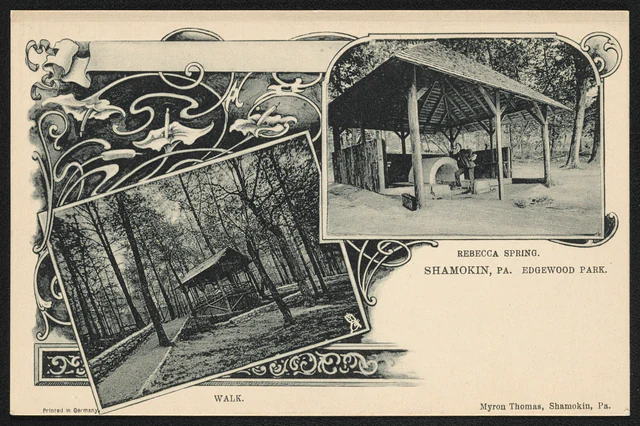
From Edgewood Park in the early twentieth century to later neighborhood parks and family attractions, recreation gave Shamokin-area residents places to gather beyond work and school.
Newspaper coverage: 1898–1949