Story
Electricity & inventionsThe Machinery That Powered Shamokin
A Shamokin Iron Works advertisement and surviving period listings reveal the engines, pumps, fans, boilers, castings, and skilled trades behind the anthracite city's industrial landscape.
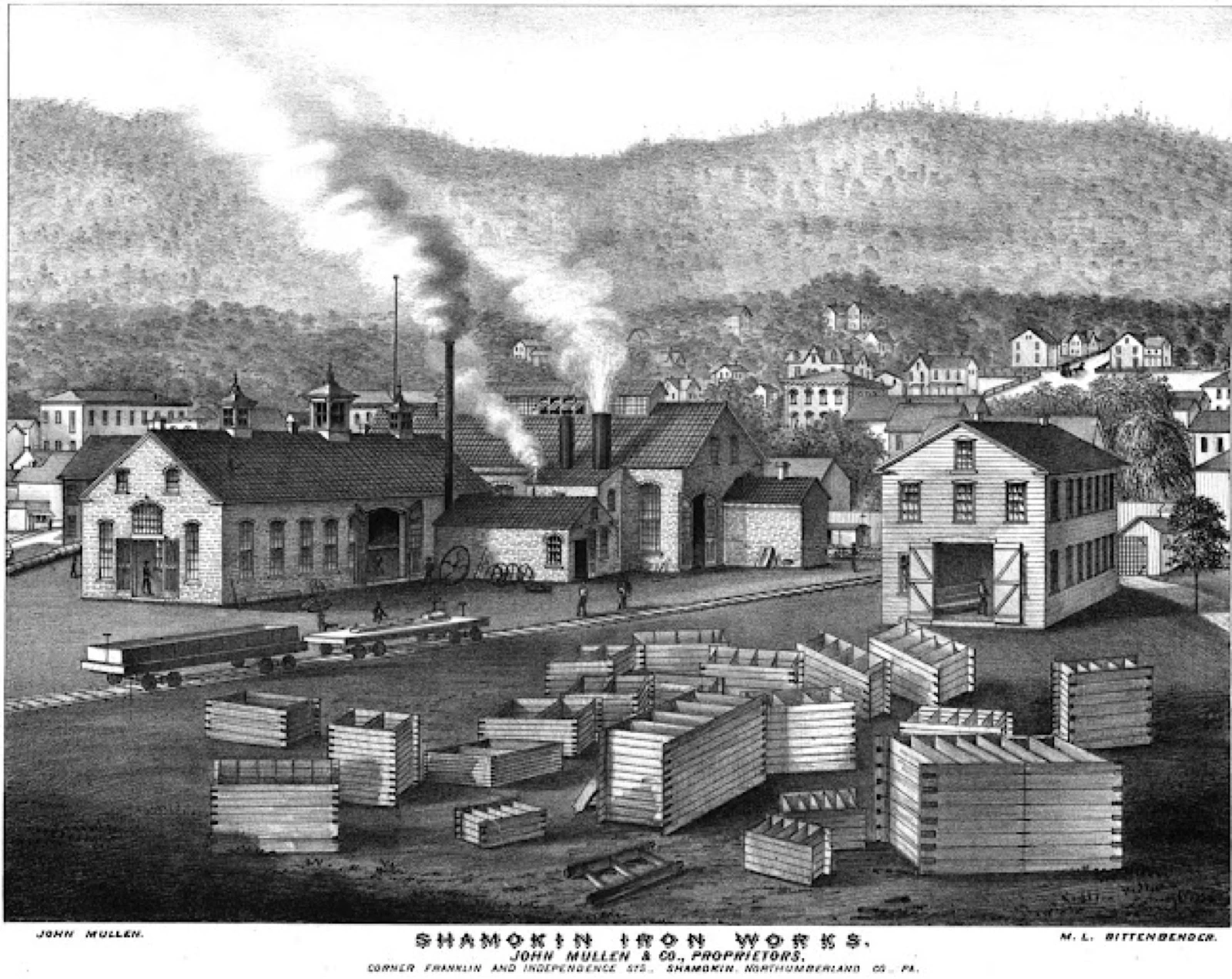
Historic business art
Related historic advertisement
Advertisements connected to this story or place.
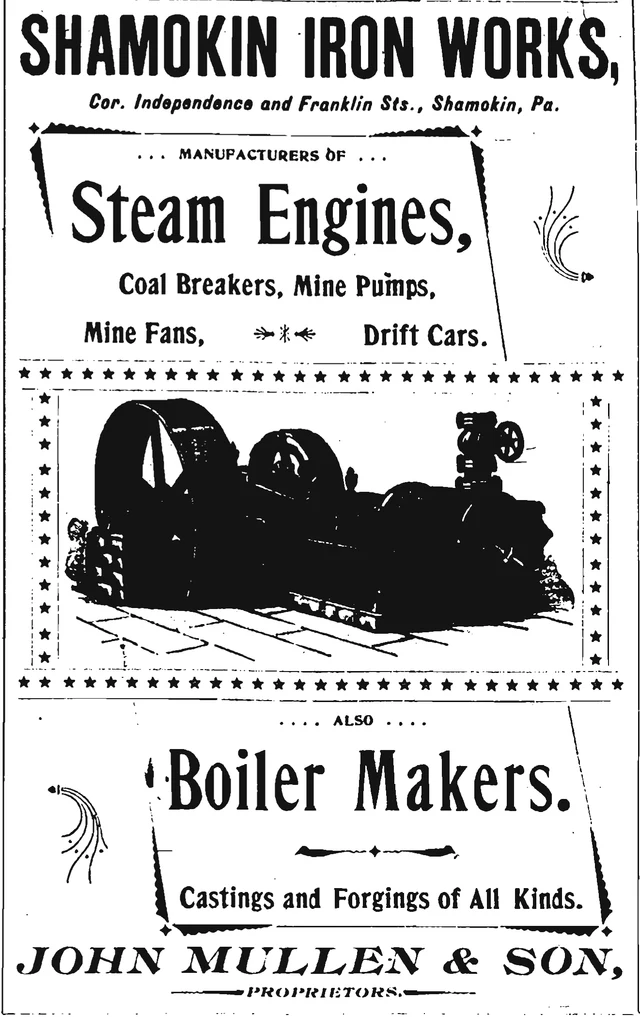
Industrial advertisement
Shamokin Iron Works / John Mullen & Son
Shamokin Iron Works / John Mullen & Son
Address: Cor. Independence and Franklin Sts., Shamokin, Pa.
A catalog of work, printed in iron and ink
The illustrated Shamokin Iron Works advertisement in the 1895–97 volume names steam engines, coal breakers, mine pumps, mine fans, drift cars, boilers, castings, and forgings. That wording is an advertisement, not a production ledger, but it identifies the kinds of equipment the firm offered to an anthracite district built around moving coal, air, water, people, and power.
The people behind the machinery
Resident listings make the works less abstract. The editions identify occupations connected with the plant, including draughtsman, foreman, molder, mechanical engineer, clerk, and machinist. The surviving volumes do not describe a complete workforce, yet those printed job titles show that a finished engine or pump depended on design, pattern and metal work, assembly, supervision, and office labor.
A name that recurs across the surviving volumes
Shamokin Iron Works appears in each of the four directory editions, and the 1901–03 volume identifies the concern with John Mullen & Son. Recurrence across surviving volumes documents repeated appearances, not an uninterrupted corporate history between editions. Read cautiously, the sequence still lets visitors follow how one industrial name remained visible while its printed associations and workforce entries changed.
Image gallery
Open any image to view the full-size photograph or document.