Historic Place
Edgewood Park
A 1905 postcard shows Edgewood Park already serving as a recreation destination, although the park’s exact opening date is not yet known.
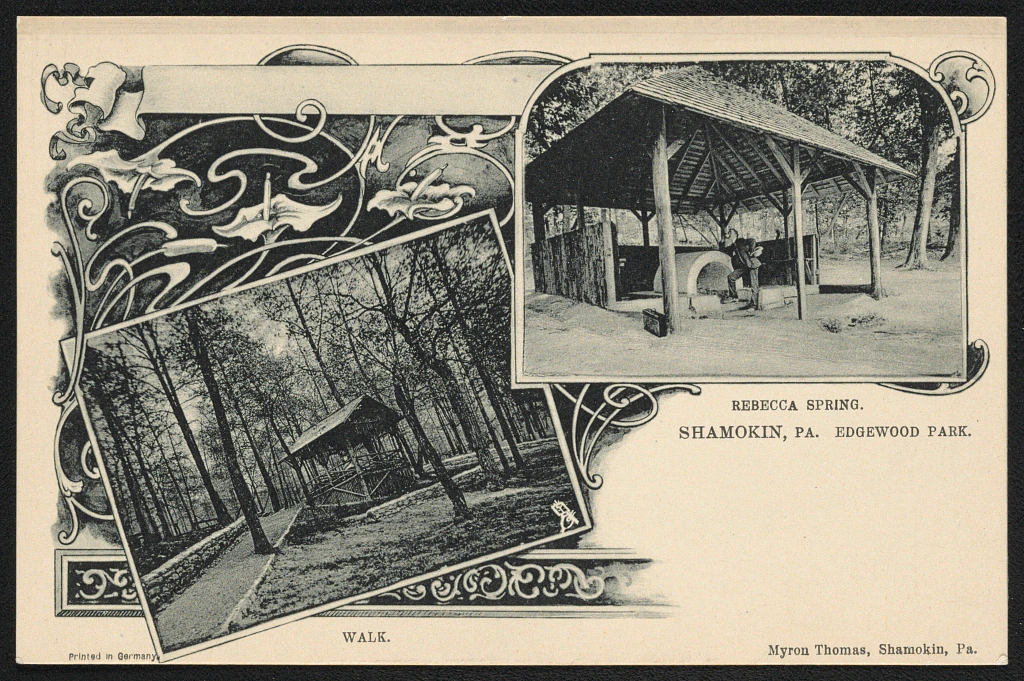
A Park by 1905
A dated Library of Congress postcard establishes that Edgewood Park was developed by 1905 without proving an opening date.
What the Maps Preserve
The 1913 Sanborn map set documents Edgewood Park after the 1905 postcard view.
Three Park Views in the 1908 Album
The brewery-sponsored city portrait includes three separate Edgewood Park scenes showing gathering space, a promenade or pavilion area, and rail access. They broaden the park story beyond the surviving 1905 postcard.
A Park Area, Not One Doorway
Period records connect Edgewood Park with a hotel and electric railway. Its location is shown as a broad area; the precise entrance is unknown.
Railway Names and Band Music
Another 1910 directory described the park differently. In August, The Billboard named the Shamokin Edgewood Street Railroad Company as proprietor and M. H. Kulp as manager, and listed local bands as its entertainment. The July and August notices do not explain the difference in managers. They may concern different reporting dates or aspects of the business; they do not, by themselves, tell us that a transfer took place.
The railway name also appears in an earlier state record. Pennsylvania’s 1900 annual report says the Shamokin Street Railway was sold at judicial sale on May 14 and reorganized as the Shamokin and Edgewood Street Railway. The similar names help explain why railway history belongs beside the park’s story, but the report does not describe a park purchase or a trolley route through the grounds.
By 1921, The Billboard’s park directory named Jesse B. Kremer as manager and a railway company as the park’s controller. It described band music, rather than recent vaudeville programming. In 1930, the directory listed Mrs. S. W. Kulp as proprietor and George H. Jones as manager and attractions manager, with neither vaudeville nor bands listed. These notices offer glimpses of changing management and entertainment, not a complete account of everything visitors heard or saw.
Ellington on the Dance Advertisement
In December 1935, Edgewood’s ballroom appeared in local publicity for a nationally known orchestra. On December 5, the Shamokin News-Dispatch announced Duke Ellington and his orchestra for December 11, with singer Ivy Anderson. Four days later, another notice identified King Brady as promoter and described the engagement as the ballroom’s regular weekly dance. The wording was emphatic, but both reports looked ahead to the same proposed evening.
A display advertisement on the December 9 page made the invitation simple: Ellington’s name, Edgewood Park, Wednesday’s date, and a one-dollar admission with tax included. It used a publicity portrait graphic, not a photograph taken at the ballroom. The notices and advertisement establish that the booking was promoted locally. They do not tell us whether the orchestra arrived, what it played, or who attended. Even with that limit, the advertisement preserves an ambitious evening offered to local dancers.
Preparing Another Season
The park’s everyday business also drew trade-paper attention. An April 1949 Billboard item, datelined April 2, reported repairs and remodeling at the restaurant, according to manager George H. Jones. He planned free attractions and radio programs to bring visitors in. Weekend operation was announced for April 15, with daily operation to begin May 15. The short notice catches preparations in progress: a restaurant being worked on and a manager looking toward the season ahead.
These separate scenes—band listings, a ballroom advertisement, and restaurant repairs—give Edgewood more than one kind of history. Its attractions and publicity addressed different audiences at different moments. The postcard and album views show the grounds; the printed notices add the people and plans behind the leisure business. Together they help recover a park as somewhere to listen, meet, and spend an evening, while leaving its many unrecorded visits to memory.