Story
Government & civic lifeReusing the Downtown
Bunker Hill’s rehabilitation program and the dispute over its shade trees place today’s downtown reuse and street plans in a longer history of neighborhood change.
Reuse as a Downtown Strategy
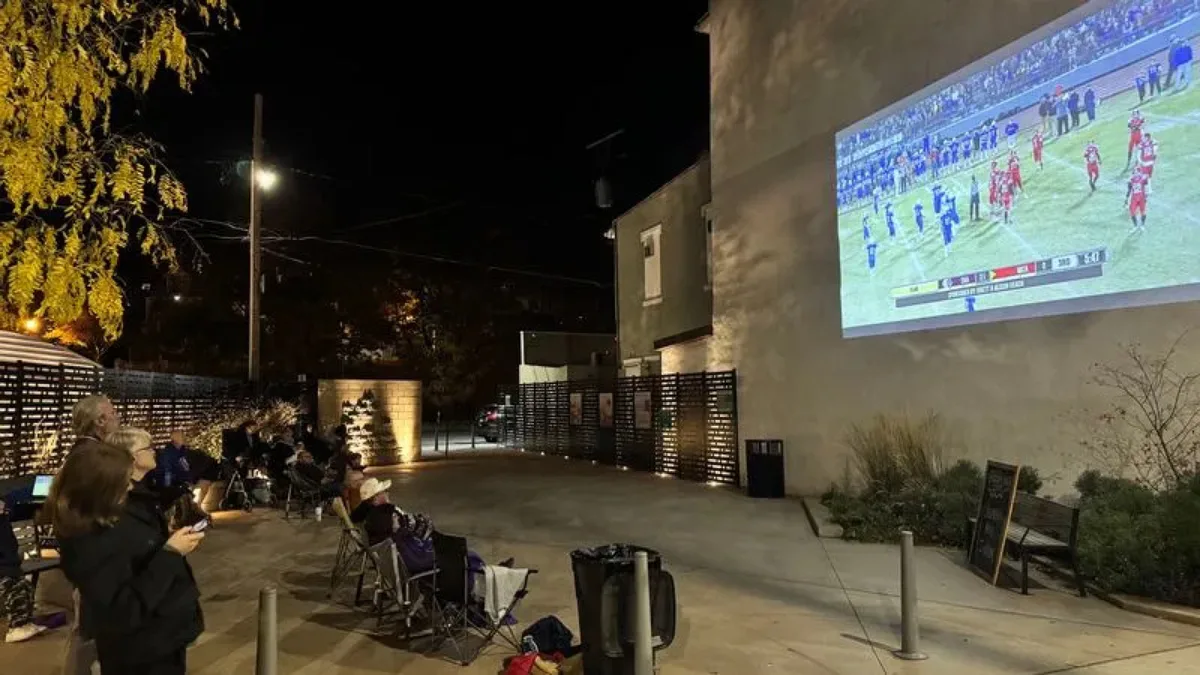
The GoShamokin revitalization plan identifies existing buildings and historic character as assets. Reuse keeps physical links to the city’s past while creating room for new activity.
Streets and Public Space
The city’s 2025 safety plan carries the work into streets, crossings, sidewalks, and public spaces. Redevelopment is therefore not limited to individual buildings; it also concerns how people move between them.
A Long-Term Civic Project
Plans establish priorities, but they do not make the work complete. Shamokin’s downtown continues to change through public investment, private rehabilitation, demolition decisions, and community use.
Bunker Hill: renewing a neighborhood
Before today’s downtown reuse plans, Shamokin faced another set of decisions about homes, streets, and neighborhood character. A city ordinance adopted on February 18, 1955 authorized steps toward creating a Redevelopment Authority. Bunker Hill later became a major urban-renewal project. Federal directory data place its planning stage in June 1970 and execution stage in February 1972; those administrative milestones mark a program taking shape, not the completion of its construction.
On August 17, 1972, the News-Item reported that more than 200 people had attended a Project Area Committee meeting at First United Methodist Church at Sunbury and Ninth Streets. Rehabilitation was presented as the principal work. The program also proposed acquiring properties for parking and recreation and improving curbs, gutters, sidewalks, and sewers. Officials described assistance through grants and loans, alongside arrangements for people who would have to move.
The plans reached into ordinary household decisions. Residents were asked to contact the field office before installing new curbs because the work could change elevations. Officials also said they would try to retain shade trees. Renewal was thus being presented not simply as clearance, but as coordinated repair of houses and their surroundings—a promise whose meaning residents would later contest.
The work behind the project number
Legal notices give this broad program a more precise identity: Bunker Hill Urban Renewal Project, Pennsylvania R-372. Three invitations published in September 1974 sought rehabilitation bids for four parcel identifiers. A February 1975 notice added two more. Contractors could obtain plans and specifications at the field office at 421 East Sunbury Street. The notices document work being offered for bids; they do not, by themselves, show who won each contract or what was finished.
Whose trees, whose neighborhood?
By June 1976, shade trees had become a public dispute. The Daily Item reported that residents meeting at the Shamokin YMCA were circulating petitions against removals and hoped to bring more than 1,000 signatures to City Council. Floyd B. Carey, executive director of the housing and redevelopment authorities, defended removals where roots interfered with curbs or sidewalks, or trees were dead or dying. The article also distinguished housing-authority work at the high-rise from the redevelopment program in Bunker Hill.
A June 9 News-Item account described more than 25 residents meeting with the Housing Authority and asking to help conserve trees. David Shade spoke for neighborhood beauty; Margaret Davis raised concerns about protecting young replacements. Residents wanted individual trees considered, rather than treating the streetscape as an obstacle to be cleared. Discussion included having a tree surgeon examine a tree an owner wished to save.
At the council discussion reported June 15, Pat Knutti challenged whether the removals had been adequately publicized. Carey pointed to earlier public meetings, while Mayor Harold Thomas promised to press for replacement planting. In November, Davis was still asking why three trees removed from her property had not been replaced. She was told planting was expected in spring. The disagreement concerned shade and familiar surroundings, but also who received information and when residents could influence the work.
A program still unfolding
The Daily Item reported an $811,000 HUD grant in March 1977. Separate city notices that spring included acquisition, demolition, and rehabilitation under R-372 in a planned funding-release request. In June, the authority was still discussing property disposition and anticipated another six months of project work. Those reports show an evolving program, not a final accounting. They also leave a lasting civic question alongside newer reuse plans: how can a neighborhood be improved while respecting the people and everyday places already there?
Image gallery
Open any image to view the full-size photograph or document.