Story
Railroads & transportationBefore the Automobile: Wagons and Streetcars in Shamokin
Express agents, blacksmiths, wagon makers, street-railway listings, tracks, and depots show how Shamokin moved people and goods before private automobiles reshaped the street.
Movement began with many kinds of work
The 1884–85 volume places Adams Express in Shamokin and names an agent, while its resident pages repeatedly list blacksmiths at addresses across the city. Those entries belong to a transportation system built from horses, wagons, repair shops, drivers, depots, and transfer points. A documented appearance confirms a listing in that volume; it does not by itself define a route or service territory.
Rails enter the printed city
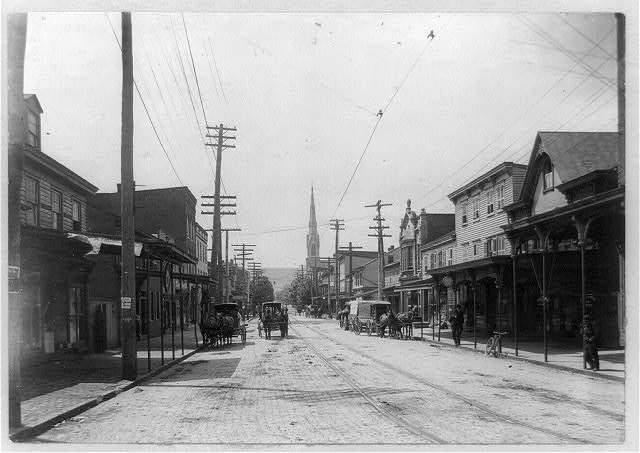
By the 1895–97 volume, the Shamokin Street Railway appears in the volume, and the 1901–03 edition names Shamokin Wagon Works as well as express offices. The overlap matters: older road trades did not vanish the moment streetcars appeared. For a time, wagons, horses, electric cars, railroad trains, and pedestrians all belonged to the same working streets.
What the map can and cannot show
The 1913 Historical fire-insurance map set records tracks, depots, industrial sidings, and the street framework at a later documented moment. It helps place transportation within the built city, but it does not establish an 1890s streetcar route. The atlas withholds linework until the route can be located reliably, while photographs and period listings preserve the people and vehicles already identified.
Streetcars in the 1908 Landscape
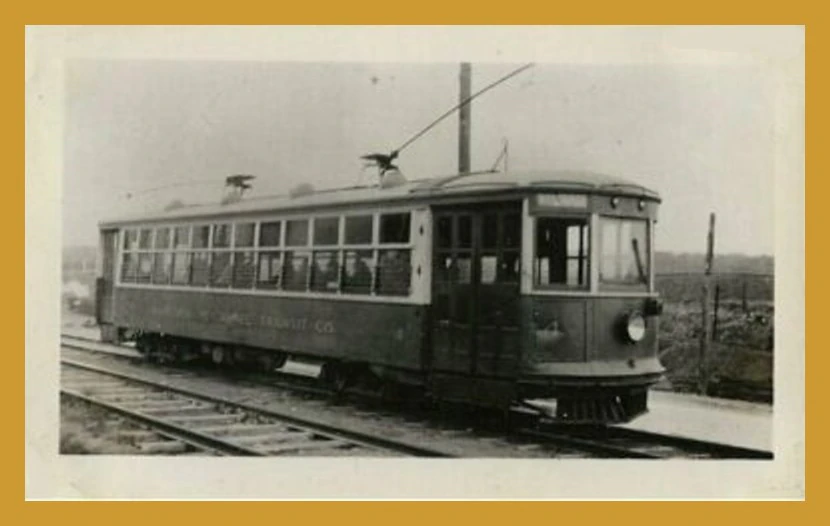
The 1908 album pictures a trolley line near Shamokin Creek and Weigh Scales and another car moving through woods at Eagle Run Brewery. The views show electric transit reaching beyond a single downtown streetscape.
Photographs Do Not Draw a Route
Relative captions can establish setting but not the complete path between stops.
Image gallery
Open any image to view the full-size photograph or document.